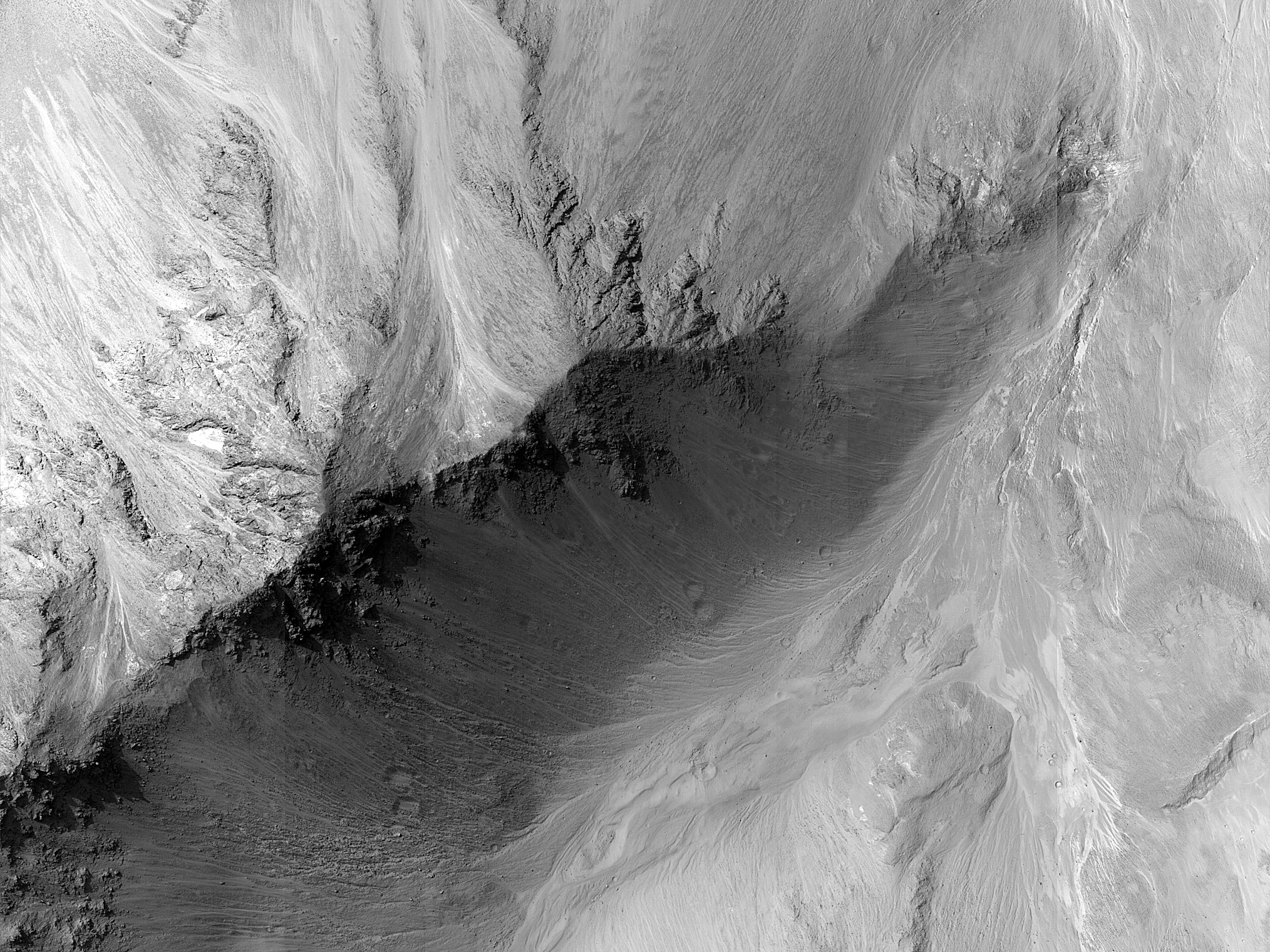
| Avalanche Season Avalanches have been observed at this scarp, which is just north of the another scarp location with such activity. Monitoring this site in the Martian spring is key to constrain the frequency of avalanches and timing of the onset of “avalanche season”. The Context Camera was also requested to “ride-along” this observation for additional coverage and details. |

| Periglacial Terrain in Protonilus Mensae With this observation, the existing periglacial mantle near a previous image can be better constrained across this area. Further up from this footprint, the terrain appears scoured and the periglacial mantle is discontinuous. The extent of this mantle is of high importance, especially because the area is poorly covered by HiRISE imagery. (“Periglacial” relates to an area marginal to a frozen or ice-covered region, like an ice sheet or glacier.) | 
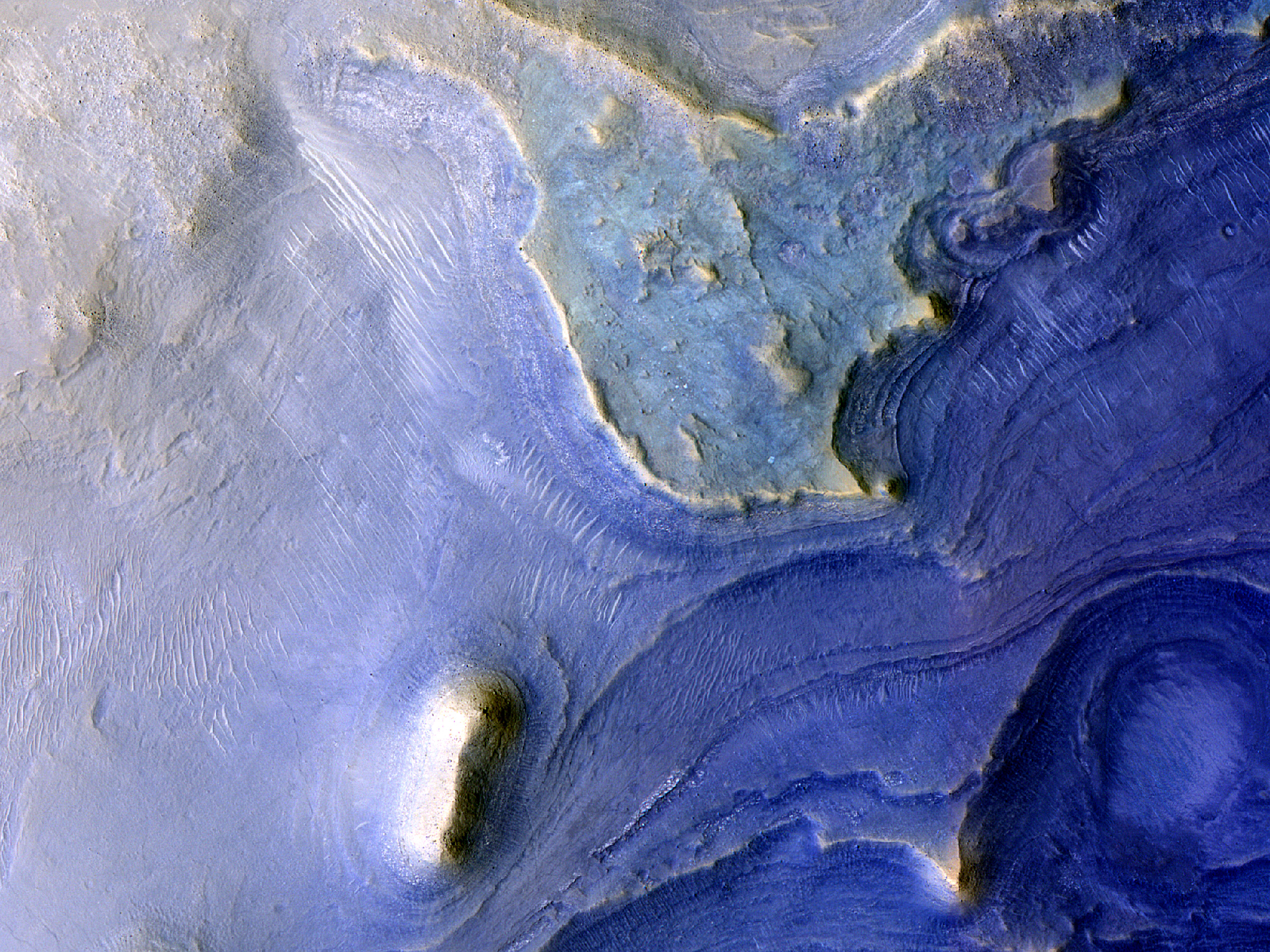
| Hydrated Sulfates in Columbus Crater A simple rationale for a HiWish target is sometimes the best: “An area of mineralogic interest identified by the CRISM instrument, which lacks HiRISE coverage.” Sulfate-rich rock outcrops on Mars may be a good location to search for evidence of past life on the planet. Columbus Crater is located in Terra Sirenum, and is about 119 kilometers in diameter. | 
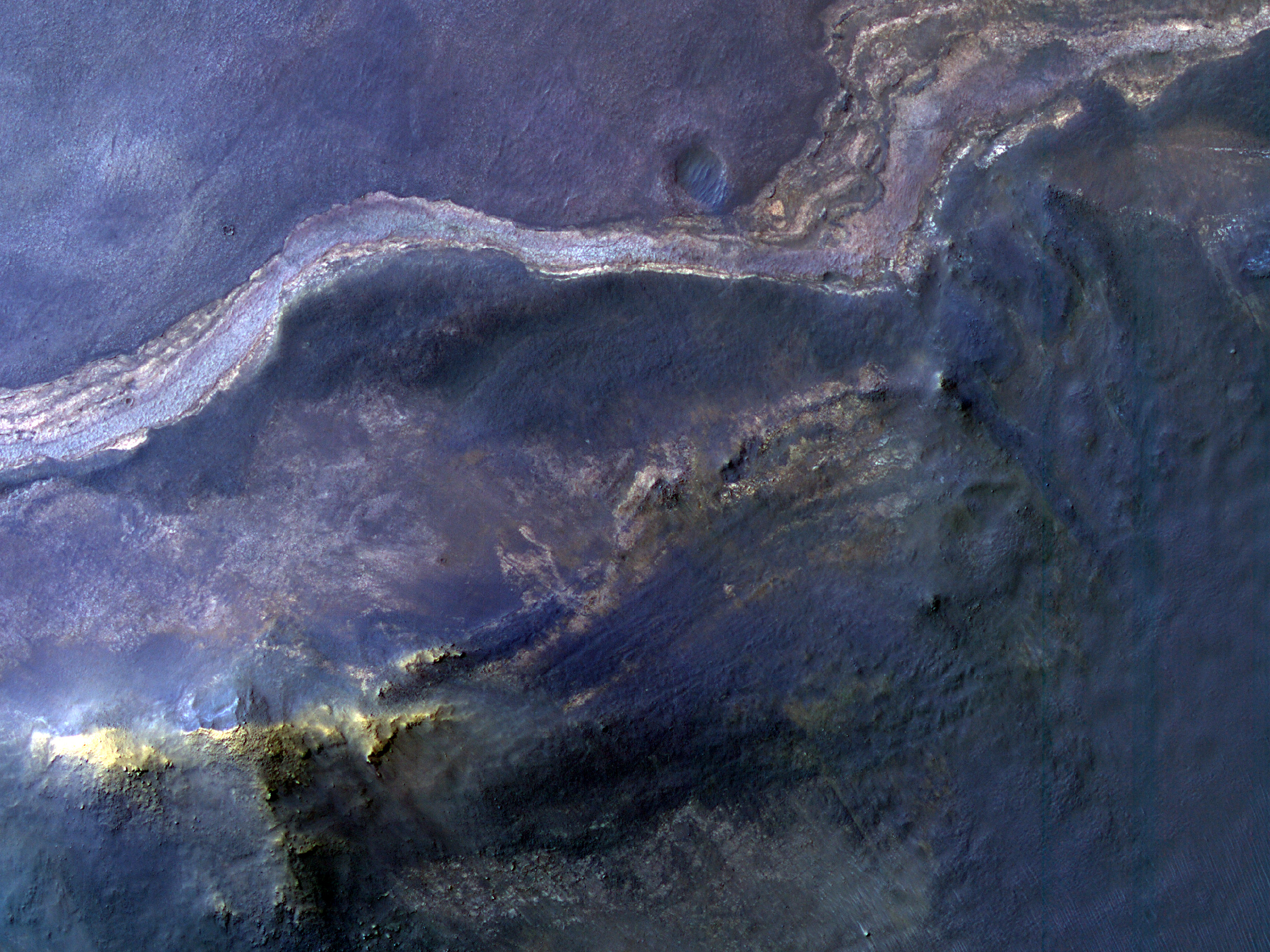
| Mantling and Glacial Erosion of an Impact Crater This observation features a mantled impact crater with a good exposure of bedrock on the northern (top) part of the rim. Other areas of bedrock show signs of erosion. The central pit may also be possibly mantled. High resolution can help to detail the stratigraphy and topography of this crater and its formations. | 
| Depressions in Deuteronilus Mensae The objective of this suggestion is to determine the nature of depressions, some of which have high, steep walls. Since this area is probably covered with an ice-rich mantle, pictures like this one will help us determine how this material evolves over time. |